

Power Plant Fuel Specification: How to Read an HFO, Diesel, and Gas Lab Report
Introduction
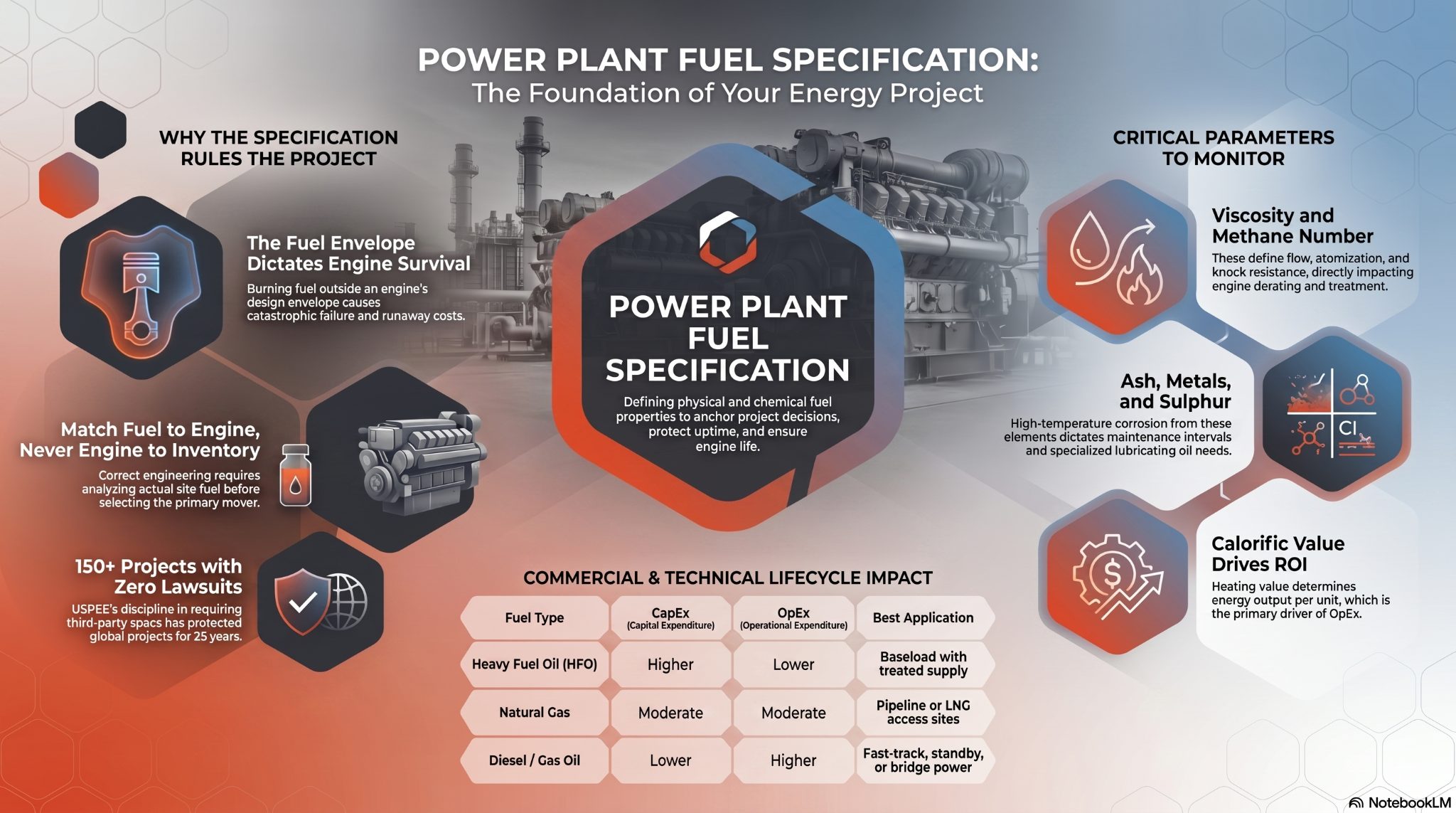
The wrong fuel will destroy a perfectly good engine, and the only thing standing between an owner and that outcome is a document most buyers never learn to read. A power plant fuel specification is the laboratory analysis that defines exactly what is in the fuel an engine or turbine will burn, from viscosity and sulphur to ash, water, and calorific value. It is the single most decisive input in selecting the right prime mover, predicting maintenance cost, and protecting equipment over its life, yet it is routinely treated as an afterthought. A mismatch between fuel and engine is one of the most expensive mistakes in power generation, and it is entirely avoidable. For developers, mine energy managers, and utilities, USP&E Global serves as the experienced guide. Across 25 years, 150 plus projects, and 35 plus countries with zero lawsuits, our 350 plus engineers require a third-party power plant fuel specification before quoting any project, because the fuel determines everything that follows.
Why Fuel Specification Matters: What the Data Shows
Every reciprocating engine and gas turbine is designed to operate within a defined fuel envelope. Burn fuel that falls outside that envelope and the consequences range from elevated maintenance cost to catastrophic failure. The World Bank energy data shows that fuel cost and fuel supply reliability are among the dominant factors in the economics of power generation across developing economies, which is precisely why the fuel specification, not the equipment brochure, should anchor every project decision.
Different fuels carry fundamentally different properties, and those properties dictate which prime mover is viable. The table below summarizes the major fuel categories used in distributed and industrial power generation.
| Fuel Type | Typical Use | Key Specification Concern |
|---|---|---|
| Heavy fuel oil | Baseload reciprocating engines | Viscosity, sulphur, ash, water |
| Marine diesel and gas oil | Fast-track and standby gensets | Cetane, sulphur, cleanliness |
| Natural gas | Gas turbines and gas engines | Methane number, heating value, contaminants |
| Crude and intermediate oils | Specialized engine applications | Highly variable, requires close analysis |
The International Energy Agency consistently identifies fuel availability and quality as decisive constraints on power delivery, particularly in frontier markets where local fuel may differ significantly from international reference grades. The U.S. Energy Information Administration similarly tracks how fuel grade and quality affect generation economics and equipment selection across fuel types. This is why a local power plant fuel specification, drawn from the actual fuel the plant will burn, matters more than any assumption about what a fuel should contain.
Key Parameters in a Power Plant Fuel Specification: What to Look For
Reading a fuel laboratory report means understanding which parameters drive engine selection and maintenance. The following are the parameters that matter most.
- Viscosity. Viscosity determines how fuel flows and atomizes, and for heavy fuel oil it dictates the heating and treatment the plant must provide. A reference such as RME180 communicates a specific viscosity grade that the engine and fuel handling system must accommodate.
- Sulphur content. Sulphur drives corrosion and emissions. High sulphur fuel demands specific lubricating oils and emissions controls, and may face regulatory limits in many jurisdictions.
- Ash and metals. Vanadium, sodium, and other metals in the ash content cause high-temperature corrosion and deposits, particularly in turbines, and can require fuel treatment or rule out certain equipment entirely.
- Water and sediment. Water and solid contamination cause injector wear, combustion problems, and filter blockages. The specification reveals whether the fuel needs purification.
- Calorific value. The heating value of the fuel determines how much energy each unit delivers, which directly affects fuel consumption, output, and operating cost.
For gaseous fuel, additional parameters apply. The table below highlights the parameters that most directly govern equipment choice.
| Parameter | Why It Matters | Equipment Impact |
|---|---|---|
| Viscosity | Flow and atomization | Fuel heating and treatment needs |
| Sulphur | Corrosion and emissions | Lube oil and emissions controls |
| Ash and metals | High-temperature corrosion | Fuel treatment or equipment exclusion |
| Water and sediment | Wear and combustion faults | Purification requirements |
| Calorific value | Energy per unit of fuel | Consumption and output |
| Methane number (gas) | Knock resistance in gas engines | Engine derating or selection |
EPC and O&M Solutions Driven by Fuel Specification: A Technical and Commercial Overview
Fuel specification is where engineering begins, not where it ends. Before any credible equipment recommendation can be made, the actual fuel must be analyzed, because the same nameplate engine may be ideal for one fuel and entirely unsuitable for another. This is why USP&E requires a third-party laboratory fuel analysis as part of disciplined power plant engineering, rather than relying on assumptions about what local fuel contains.
The specification drives a cascade of design decisions. Heavy fuel oil with high viscosity requires heating, settling tanks, centrifuges, and a fuel treatment plant, all of which form part of the balance of plant and the EPC construction scope. High sulphur or high ash content may dictate specific materials, lubricating oils, and maintenance intervals. For gaseous fuel, a low methane number can force engine derating or a different engine selection entirely. None of these decisions can be made responsibly without the laboratory report in hand.
The specification also shapes the long-term operations and maintenance plan and cost. Fuel quality directly determines maintenance intervals, component life, and consumable consumption, which is why any credible availability guarantee depends on knowing the fuel. The choice between heavy fuel oil, diesel, and natural gas is ultimately a fuel specification decision married to a commercial one, because each fuel carries a different capital cost, operating cost, and lead time. A buyer who selects equipment before analyzing the fuel is reversing the only correct order of decisions.
Fuel Type Comparison for Power Projects
| Fuel Type | CapEx | OpEx | Lead Time | Best Application |
|---|---|---|---|---|
| Heavy fuel oil | Higher | Lower fuel cost | Longer | Baseload where treated HFO supply exists |
| Natural gas | Moderate | Moderate | Moderate | Sites with pipeline or LNG access |
| Diesel and gas oil | Lower | Higher fuel cost | Shortest | Fast-track, standby, and bridge power |
| Dual fuel | Higher | Variable | Longer | Sites with uncertain fuel supply security |
Case Studies: How Fuel Specification Protected the Project
Across more than 150 projects in over 35 countries, USP&E’s insistence on a verified third-party fuel specification before quoting has repeatedly protected clients from the most damaging error in power development: matching an engine to the wrong fuel. In frontier markets where local heavy fuel oil can vary widely from international reference grades, the laboratory report has often been the difference between a plant that runs reliably for years and one that suffers premature failures and runaway maintenance cost.
This discipline reflects USP&E’s engineering-first approach. The company’s inventory of natural gas turbines, HFO engines, and diesel gensets allows it to match the right prime mover to the analyzed fuel rather than forcing a sale of whatever is in stock. Measurable outcomes across mining, utility, and industrial sectors, including significant fuel cost savings and high availability under long-term O&M contracts, all begin with correctly characterizing the fuel. Documented results appear in the USP&E client references, and the breadth of delivery is visible in the USP&E project portfolio. For decision-makers, the lesson is direct: the fuel specification is the foundation every other decision rests on.
How to Use a Power Plant Fuel Specification Correctly: 10 Critical Criteria
- Obtain a third-party analysis. Always secure an independent laboratory fuel analysis rather than relying on a supplier’s claims. Independence protects the integrity of the result.
- Test the actual fuel. Analyze the fuel the plant will actually burn at the actual site, not a generic reference grade, because local fuel frequently differs from international standards.
- Check viscosity against engine limits. Confirm the fuel viscosity falls within the engine’s accepted range and budget for the heating and treatment that heavy fuel requires.
- Review sulphur for corrosion and compliance. Assess sulphur content for both equipment protection and regulatory compliance in the project jurisdiction.
- Scrutinize ash and metals. Examine vanadium, sodium, and total ash, because these drive high-temperature corrosion and may exclude certain turbines outright.
- Quantify water and sediment. Determine whether the fuel requires purification, settling, or centrifuging before it can be safely burned.
- Confirm calorific value. Use the heating value to model fuel consumption and operating cost accurately rather than guessing.
- For gas, check the methane number. A low methane number can force engine derating or a different engine selection, so confirm it before committing.
- Match fuel to engine, not engine to inventory. Let the fuel specification drive equipment selection, never the reverse. Forcing a fuel to fit available equipment invites failure.
- Engage a partner who demands the specification. USP&E’s 25-year, zero-lawsuit record reflects a company that requires the fuel analysis before quoting, because that is the only responsible order of work.
Frequently Asked Questions: Power Plant Fuel Specification
What is a power plant fuel specification?
A power plant fuel specification is a laboratory analysis that defines the physical and chemical properties of the fuel an engine or turbine will burn, including viscosity, sulphur, ash and metals, water and sediment, and calorific value. It is the decisive input for selecting the right prime mover and predicting maintenance cost. A credible project always obtains an independent, third-party fuel specification before any equipment is selected.
Why do I need a fuel analysis before buying a generator or turbine?
You need a fuel analysis before buying because the same engine can be ideal for one fuel and ruinous for another. Burning fuel outside an engine’s design envelope causes corrosion, deposits, premature wear, and in severe cases catastrophic failure. Analyzing the actual fuel first ensures the equipment, the fuel treatment, and the maintenance plan are all matched to reality rather than to assumptions.
What does RME180 mean in a fuel specification?
RME180 is a reference designation for a grade of residual marine fuel oil with a specific viscosity, commonly encountered when discussing heavy fuel oil for reciprocating engines. The designation communicates the viscosity grade the engine and fuel handling system must be designed to accommodate, including heating and treatment. Confirming the exact grade against the engine’s accepted fuel range is an essential early step.
What fuel parameters matter most for a heavy fuel oil plant?
For a heavy fuel oil plant, the parameters that matter most are viscosity, which dictates heating and treatment, sulphur, which drives corrosion and emissions, ash and metals such as vanadium and sodium, which cause high-temperature corrosion, and water and sediment, which cause wear and combustion problems. Calorific value also matters for fuel consumption modeling. Each of these must be checked against the engine’s design limits.
How does fuel specification affect operating and maintenance cost?
Fuel specification directly affects maintenance intervals, component life, lubricating oil choice, and consumable consumption, which together drive a large share of operating cost. Poor-quality fuel shortens maintenance intervals and component life, raising lifetime cost significantly. This is why any credible availability guarantee or O&M plan depends on first knowing the verified fuel specification.
Can one engine run on multiple fuels?
Some engines and turbines can run on more than one fuel, such as dual-fuel units that operate on natural gas and diesel, but switching between fundamentally different fuels like heavy fuel oil and natural gas is complex and not instantaneous. The viable options are governed entirely by the fuel specifications involved and the engine’s design. A fuel analysis is required to determine what any given engine can safely and economically burn.
Summary: Key Takeaways for Power Plant Fuel Specification Decision-Makers
- A power plant fuel specification is the laboratory analysis defining the fuel’s properties, and it is the decisive input for selecting the right prime mover.
- Matching an engine to the wrong fuel is one of the most expensive and avoidable errors in power generation.
- The key parameters are viscosity, sulphur, ash and metals, water and sediment, and calorific value, plus methane number for gaseous fuel.
- Always obtain a third-party analysis of the actual fuel at the actual site, because local fuel often differs from international reference grades.
- The power plant fuel specification drives equipment selection, fuel treatment, balance of plant, and the long-term maintenance plan and cost.
- Fuel must drive equipment selection, never the reverse, and the right partner demands the fuel analysis before quoting anything.
Ready to Power Your Project? Talk to USP&E’s Engineers Free.
USP&E Global offers a complimentary 4-hour engineering consultation for qualified power station, EPC, and O&M projects. Whether you are in early feasibility or ready to mobilize, our team of 350 plus engineers across 35 plus countries is ready to guide your project to success with speed and without excuses.
USP&E Global. Powering Possibility. Built for the Frontier.
ISO 9001:2015 | ISO 45001:2018 | 150+ Projects | 35+ Countries | Zero Lawsuits
Quick Links:
- Contact USP&E by clicking on this link.
- Request a fast equipment quote
Global Resources
- USP&E's Project Experience Portfolio
- USP&E Case Studies and Client Reference Letters
- USP&E Integrity and Compliance policy
- USP&E's ISO Certifications and Credentials