
Used Dual Fuel Engines & Gensets for Sale
Wartsila, MAN, Hyundai HiMSEN, Niigata, Daihatsu & more!
USP&E Dual Fuel Inventory at a Glance
-
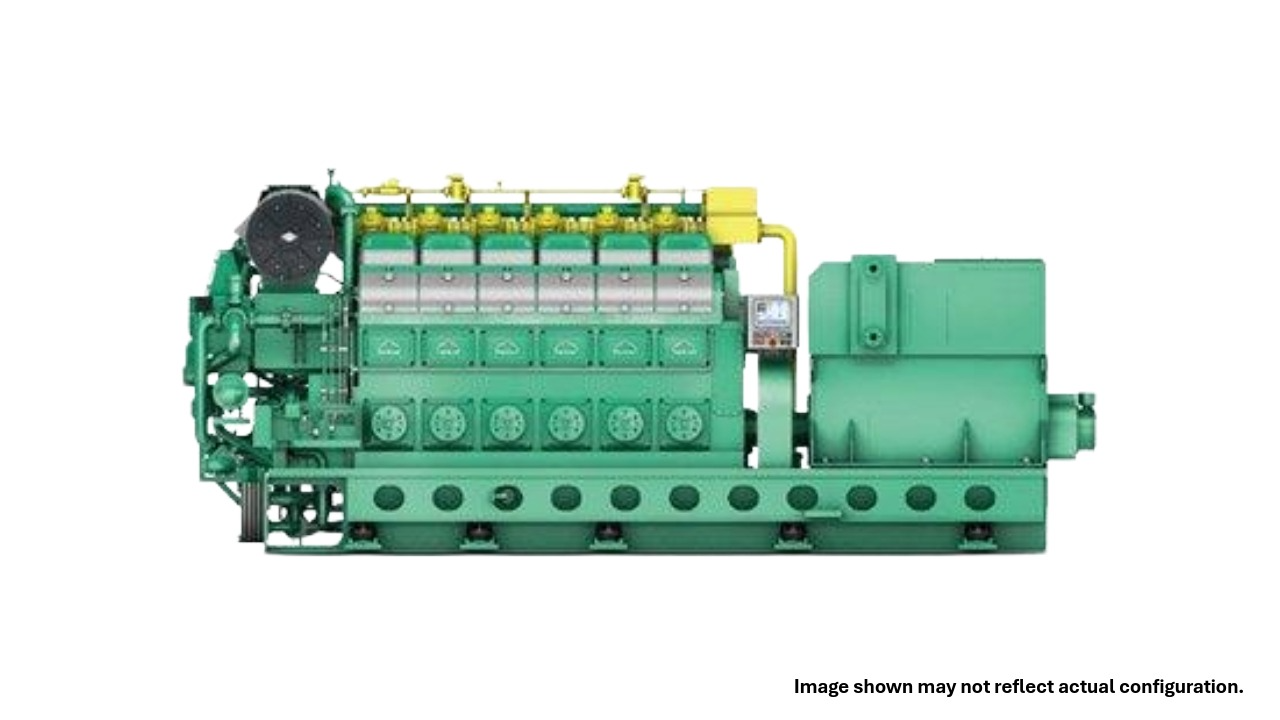
Typical dual fuel inventory: Medium-speed engine generating sets from around 1 MW to 18 MW per unit, plus larger gas-diesel machines
-
Brands supplied: Wartsila (32DF, 34DF, 50DF, 46GD), MAN (35/44DF, 51/60DF), Hyundai HiMSEN, Niigata, Daihatsu
-
Fuels: Natural gas and LNG in gas mode; heavy fuel oil, light fuel oil, marine diesel oil and liquid biofuel in liquid mode
-
Fuel switching: Seamless transfer between gas and liquid fuel while running, without stopping the engine or losing load
-
Configurations: In-line 6L, 8L, 9L and V12, V16, V18, V20 arrangements, land-based power plant and marine auxiliary
-
Frequencies: 50 Hz and 60 Hz, typically 500 to 750 rpm depending on bore
-
Emissions: IMO Tier II compliant in diesel mode, Tier III compliant in gas mode on modern platforms
-
Lead time: Immediate to 120 days for stocked units; 12 to 24 months for EPC turnkey plants
-
Applications: IPP baseload where fuel supply is uncertain, island and isolated grids, LNG-to-power, mining, marine auxiliary and propulsion
- Compliance: ISO 9001:2015, ISO 45001:2018, OFAC and FCPA compliant
A dual fuel engine is not a compromise between a gas engine and a diesel engine. It is a diesel engine that can also burn gas, using two entirely different combustion cycles depending on which fuel it is running.
In gas mode the engine works on the Otto cycle. A lean air-gas mixture is drawn into the cylinder and ignited by a very small injection of liquid pilot fuel — the “micropilot” — which acts as a high-energy ignition source in place of a spark plug. That pilot amounts to less than 1% of full-load fuel energy.
In liquid mode the same engine works on the conventional diesel cycle, with a traditional fuel injection system, exactly as any medium-speed diesel would.
Transfer between the two happens while the engine is running, under load, without stopping and without changing valves. That is the entire commercial proposition.
Why Dual Fuel Matters in Frontier Markets
Fuel supply in frontier markets is not a given. Pipelines are commissioned late. LNG cargoes are delayed. Currency controls interrupt fuel imports. Gas fields come online behind schedule.
A single-fuel plant is hostage to all of that. A dual fuel plant is not.
Gas supply risk. A plant designed around a gas field or LNG terminal that has not yet been commissioned can run on HFO or diesel from day one and transfer to gas when supply arrives — without replacing the engines.
Price arbitrage. Where both fuels are available, the plant runs on whichever is cheaper at that moment. Over a twenty-year concession, that optionality is worth a great deal.
Bankability. Lenders assessing an IPP in a market with uncertain gas supply treat fuel flexibility as genuine risk mitigation rather than a feature. It changes the risk profile of the project.
Island and isolated grids. Caribbean and Pacific island utilities running on imported diesel can transition to LNG progressively as import infrastructure develops, using the same generating plant throughout.
Emissions compliance. Gas mode delivers substantially lower NOx and effectively eliminates SOx and particulates. Where a plant must meet tightening emissions limits but cannot guarantee gas supply, dual fuel is often the only workable answer.
Dual Fuel Engines by Manufacturer
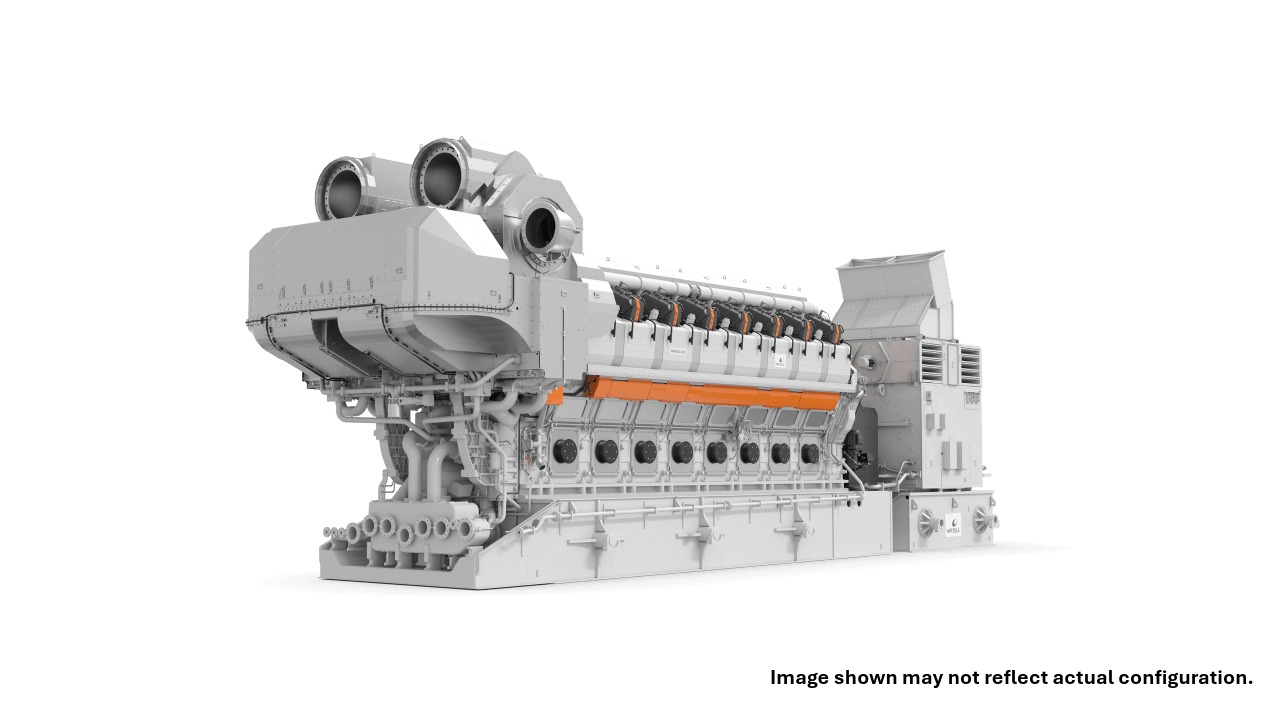
Wartsila 32DF — Based on the Wartsila 32 diesel platform introduced in the mid-1990s, the 32DF is the machine that established medium-speed dual fuel in power generation. An 18V32DF delivers roughly 5.8 MW in gas mode and 6.1 MW in diesel mode. USP&E stocks an 18V32DF.
Wartsila 34DF — The successor to the 32DF, sharing the same dual fuel technology as the larger 50DF. Available in 12V, 16V and 20V configurations covering 5.6 MW to 9.8 MW, at 450 to 520 kW per cylinder. Around 30% higher output than the 32DF, with double-wall gas piping and the UNIC control system. Fully fuel-flexible with gas mode operation from 0% to 100% fuel sharing. USP&E stocks a W20V34DF at 9.7 MW.
Wartsila 50DF — The 500 mm bore machine, widely referenced in LNG carrier propulsion. The 18V50DF reaches 17,100 kW. Suits utility-scale IPP and large marine applications.
Wartsila 46GD — Gas diesel, using high-pressure gas injection rather than lean-burn Otto cycle. A different technology to the DF range, with different fuel and emissions characteristics. USP&E has supplied 18V46GD machines at 64 MW.
MAN — The 35/44DF and 51/60DF platforms, strongly represented in marine and power plant applications.
Hyundai HiMSEN — The H32/40DF and related platforms, competitively priced and increasingly common in Asian and African projects. USP&E stocks HiMSEN 9H25/33 units.
Gas Mode, Liquid Mode and What Changes Between Them
Output differs slightly between modes. A dual fuel engine typically produces marginally less in gas mode than in diesel mode. On a documented Wartsila 32DF installation, plant capacity was 11.6 MWe on gas against 12.2 MWe on diesel — roughly 5% lower on gas. Size the plant against the mode it will spend most of its life in.
Gas quality matters. The Wartsila 34DF has a nominal design point of methane number 80. Gas of lower methane number can be used with altered performance, typically some derating and adjusted timing. Confirm your gas analysis against the engine specification before committing.
Lean-burn combustion. In gas mode the air-fuel mixture is deliberately lean, with more air than combustion requires. This lowers peak combustion temperature, which cuts NOx sharply and permits higher compression ratio and higher brake mean effective pressure without knock.
Pilot fuel is always present. Even in full gas mode the micropilot injection continues, at under 1% of fuel energy. That means a dual fuel plant always needs a liquid fuel supply, however small, and the pilot fuel system must be maintained regardless of operating mode.
HFO operation requires the full liquid fuel train. Heavy fuel oil needs heating, centrifugal separation, viscosity control and appropriate storage. A plant intended to run HFO carries considerably more auxiliary equipment than a gas-only plant.
Emissions differ by mode. Modern dual fuel platforms are IMO Tier II compliant in diesel mode and Tier III compliant in gas mode. Achieving Tier III in diesel mode requires additional aftertreatment such as a NOx reducer.
LNG-to-Power and Fuel Transition Projects
Dual fuel is the natural technology for markets moving from liquid fuel to gas.
The sequence that works. Build the plant. Run it on HFO or diesel from commissioning, generating revenue immediately. Commission gas supply — pipeline, LNG terminal, FSRU or virtual pipeline — on its own timeline. Transfer to gas when it is ready. No engine replacement, no plant outage, no stranded capital.
Small-scale LNG. Where a full import terminal is not justified, ISO container LNG and virtual pipeline delivery can supply modest gas volumes. Dual fuel plants tolerate intermittent gas supply because they simply fall back to liquid fuel when a cargo is late.
FSRU-linked IPPs. Floating storage and regasification units have made LNG-to-power viable in markets that could never fund onshore terminals. Dual fuel generation is the standard partner technology.
USP&E delivers these projects across Ghana, Nigeria, the Democratic Republic of Congo, Zambia, Mozambique, Kenya, Iraq, Uzbekistan and the Caribbean.
Dual Fuel Power Plant EPC and O&M
EPC scope: fuel supply assessment for both modes, gas analysis and treatment, gas pressure reduction and safety systems, HFO handling including heating, separation and viscosity control, engine installation and alignment, exhaust and heat recovery, MV switchgear and grid interconnection, double-wall gas piping and gas detection, control system integration, commissioning and performance testing in both fuel modes.
O&M scope: operator staffing and training on both modes, fuel changeover procedures and drills, scheduled maintenance to OEM intervals, pilot fuel system maintenance, HFO system chemistry and separator management, top-end and major overhauls, spares holding, availability guarantees.
Commission and test in both modes. A plant accepted only in liquid mode may reveal problems the first time it transfers to gas, often years later and outside warranty. Insist on performance testing in gas mode, liquid mode and during transfer.
Typical EPC delivery for a 10 MW to 50 MW dual fuel plant is 12 to 24 months from notice to proceed.
Dual Fuel Generators by Power Output
1 MW to 5 MW — Smaller medium-speed units and marine auxiliaries. Suits industrial captive power and vessel applications.
5 MW to 10 MW — The core IPP band. Wartsila 32DF and 34DF machines sit here. USP&E stock includes an 18V32DF at 6.1 MW and a W20V34DF at 9.7 MW.
10 MW to 18 MW — Wartsila 50DF and MAN 51/60DF territory. Utility-scale building blocks, usually deployed in multi-unit arrays.
Above 18 MW — Gas diesel machines and multi-unit plants. USP&E has supplied 18V46GD units at 64 MW.
Buying a Used Dual Fuel Generator
Confirm it is genuinely dual fuel. Model designation matters: DF denotes dual fuel, SG denotes spark-ignited gas only, D denotes diesel only, GD denotes gas diesel with high-pressure injection. A Wartsila 32 and a Wartsila 32DF are different machines.
Ask which mode it actually ran in. Many dual fuel engines spend their entire life on liquid fuel because gas never arrived. That is good news for the gas train’s condition but means it has never been proven in service. Conversely, a machine that ran HFO throughout has had a harder life than one on gas.
Verify the gas train is complete and certified. Double-wall gas piping, gas valve unit, gas detection and ventilation are safety-critical and expensive to replace. Confirm they are present, complete and certified.
Check the pilot fuel system. It runs continuously in both modes and is often overlooked in inspection.
Establish the HFO auxiliary scope. Heaters, separators, viscosity controllers and heated storage are a substantial part of plant cost. A bare engine is a long way from an HFO-capable plant.
Gas analysis against methane number. Confirm your gas meets the engine’s design point, typically methane number 80, or budget for derating.
Control system generation. Older machines may carry obsolete control platforms. Modern grid codes often require capability that legacy controls cannot deliver.
USP&E supports pre-purchase inspection, records review, load testing where practical and third-party verification.
USP&E Dual Fuel Track Record
USP&E supplies dual fuel generating sets and delivers EPC and O&M in-house across Africa, the Middle East, Central Asia and the Caribbean, holding inventory outright rather than brokering. Fuel flexibility is a core part of how USP&E structures projects in markets where gas supply timing is uncertain.
Dual Fuel Generator FAQ
What is a dual fuel generator and when is it used?
A dual fuel generator is a medium-speed reciprocating engine that runs on either natural gas or liquid fuel, switching between them while operating. In gas mode it works on the lean-burn Otto cycle, ignited by a small pilot injection of liquid fuel. In liquid mode it runs as a conventional diesel engine. It is used wherever fuel supply is uncertain: IPP projects awaiting gas commissioning, island grids transitioning from diesel to LNG, and any plant that benefits from switching to whichever fuel is cheaper. USP&E supplies Wartsila, MAN and HiMSEN dual fuel units from around 1 MW to 18 MW.
Can dual fuel generators switch between fuels while running?
Yes. Transfer between gas and liquid fuel happens seamlessly while the engine is running under load, without stopping the engine, without changing valves and without loss of power or speed. This is the defining characteristic of the technology and the reason it is specified in markets with uncertain fuel supply. Modern platforms also support fuel sharing, operating anywhere between 0% and 100% gas.
How does a dual fuel engine ignite gas without a spark plug?
By micropilot injection. A very small quantity of liquid fuel is injected into the lean air-gas mixture, where it auto-ignites under compression and acts as a high-energy ignition source for the main gas charge. The pilot represents less than 1% of full-load fuel energy. It remains in use even at full gas operation, which means a dual fuel plant always requires a liquid fuel supply and a maintained pilot fuel system, however small the consumption.
Does a dual fuel engine produce the same output on gas and diesel?
Not quite. Output in gas mode is typically slightly lower than in diesel mode. On a documented Wartsila 32DF installation, plant capacity was 11.6 MWe on gas against 12.2 MWe on diesel, roughly 5% lower. Size the plant against whichever mode it will operate in for most of its life, and confirm the ratings for both modes before purchase.
What gas quality does a dual fuel engine need?
The Wartsila 34DF has a nominal design point of methane number 80. Gas of lower methane number can be used, but with altered performance — typically some derating and adjusted ignition timing to avoid knock. Heavier hydrocarbons lower the methane number, so associated gas and rich pipeline gas need particular attention. Always provide an actual gas analysis before selecting an engine rather than assuming pipeline specification.
What fuels can a dual fuel generator run on?
In gas mode: natural gas and LNG. In liquid mode: heavy fuel oil, light fuel oil, marine diesel oil and liquid biofuel. This flexibility is what makes the technology valuable in markets where any single fuel supply carries delivery risk. Note that heavy fuel oil operation requires a full liquid fuel treatment train including heating, centrifugal separation and viscosity control, which adds significantly to plant scope.
What is the difference between dual fuel and gas diesel engines?
Dual fuel engines such as the Wartsila 32DF and 34DF use low-pressure lean-burn Otto cycle combustion in gas mode with a micropilot ignition source. Gas diesel engines such as the Wartsila 46GD use high-pressure direct gas injection, working on the diesel cycle in both modes. The technologies differ in gas supply pressure requirement, emissions profile and combustion behaviour. Both are fuel-flexible, but they are not interchangeable and the model designation matters when specifying or buying.
Are dual fuel generators cleaner than diesel generators?
In gas mode, substantially. Lean-burn combustion lowers peak temperature and cuts NOx sharply, while running on natural gas effectively eliminates SOx and particulates. Modern dual fuel platforms are IMO Tier II compliant in diesel mode and Tier III compliant in gas mode. Achieving Tier III in diesel mode requires additional aftertreatment such as a NOx reducer. For operators facing tightening emissions limits without guaranteed gas supply, dual fuel is frequently the only workable route.
What should I check when buying a used dual fuel generator?
First, confirm the model is genuinely dual fuel: DF denotes dual fuel, SG spark-ignited gas only, D diesel only, GD gas diesel. Then establish which mode it actually ran in, since many dual fuel engines never receive gas. Verify the gas train is complete and certified, including double-wall piping, gas valve unit and gas detection. Check the pilot fuel system, which runs in both modes and is often overlooked. Establish what HFO auxiliary equipment is included. Finally, confirm your gas analysis against the engine’s methane number design point.
Does USP&E provide EPC and O&M for dual fuel power plants?
Yes, both in-house. EPC scope covers fuel supply assessment for both modes, gas treatment and pressure reduction, HFO handling with heating and separation, engine installation, double-wall gas piping and detection, switchgear, grid interconnection, control integration, and commissioning with performance testing in gas mode, liquid mode and during transfer. O&M covers operator training on both modes, fuel changeover procedures, pilot fuel system maintenance, HFO separator management, overhauls, spares and availability guarantees. Typical EPC delivery for a 10 MW to 50 MW plant is 12 to 24 months.