

Gold Mine Power: The Complete Guide to Captive Generation for Remote Gold Operations
A gold mine turns rock into bullion through a relentless chain of crushing, grinding, leaching, and processing, and every link in that chain runs on electricity. In the gold belts of West Africa, the Sahel, and beyond, that electricity almost never comes from a reliable grid, so the mine must generate its own. Gold mine power is the captive generation that keeps a remote operation producing around the clock, and getting it right is the difference between a profitable mine and one crippled by outages and runaway fuel cost. For a mine energy manager, owner, or developer, the power solution shapes both production reliability and operating cost for the entire life of the deposit. This guide explains what the data shows, what the options are, and how an experienced engineering partner delivers them. USP&E Global has powered gold mines across West Africa and the Sahel for over two decades, and we act as the guide while your operation remains the priority.
The Gold Mine Power Challenge: What the Data Shows
Gold mining is energy intensive and concentrated in regions where the grid is weak or absent. Processing gold ore through crushing, milling, and leaching demands large, continuous power, and the carbon in leach and elution circuits in particular cannot tolerate interruption without costly consequences. Because most gold mines sit far from dependable transmission, captive generation is the norm, and energy is typically among the largest costs in the operation.
The table below summarizes why gold mine power demands a specific approach.
| Gold Mine Power Factor | Reality | Implication |
| Location | Remote gold belts, weak or no grid | Captive generation required |
| Processing load | Continuous, interruption sensitive | High availability essential |
| Energy cost | Among the largest operating costs | Fuel efficiency drives margin |
| Region | West Africa, Sahel, and similar | Frontier logistics and security |
Authoritative data frames the context. The World Bank energy and mining data portal documents the electrification gap across the gold producing regions of Africa, the International Energy Agency Africa Energy Outlook details the Sub-Saharan supply deficit, and the African Development Bank energy program describes the frameworks supporting captive industrial generation. These sources confirm that reliable gold mine power is a precondition for production across the world’s most active gold belts.
Key Drivers of Gold Mine Power Demand: Why It Matters Now
Several forces are raising the importance of getting gold mine power right. Each one strengthens the case for a well engineered solution.
- Strong gold economics. Sustained high gold prices are driving new mines and expansions across West Africa and the Sahel, each requiring reliable captive power to bring ore into production.
- Remote, weak grid sites. Gold deposits sit far from dependable grids, so captive generation, often diesel or heavy fuel oil, is the default rather than the exception.
- Fuel cost pressure. Energy is among the largest operating costs at a gold mine, so the configuration that lowers fuel burn, increasingly hybrid solar plus thermal, directly protects margin.
- ESG expectations. Gold majors and their financiers increasingly require lower carbon intensity, driving hybrid solar and storage integration alongside thermal baseload.
The right solution depends on fuel, site, and mine life. The table below compares the main options for gold mine power.
| Power Solution | Strength | Best Application |
| Diesel generation | Fast deployment, flexible | Fast track, remote, bridging power |
| Heavy fuel oil | Lowest thermal fuel cost | Large baseload where HFO is available |
| Hybrid solar and thermal | Lowest lifecycle fuel cost | High irradiation gold belts |
| Owned plus operated | Lifecycle value plus uptime | Long life gold operations |
A qualified power plant engineering partner matches the solution to the specific gold operation rather than forcing a single technology.
EPC and O&M Gold Mine Power: A Technical and Commercial Overview
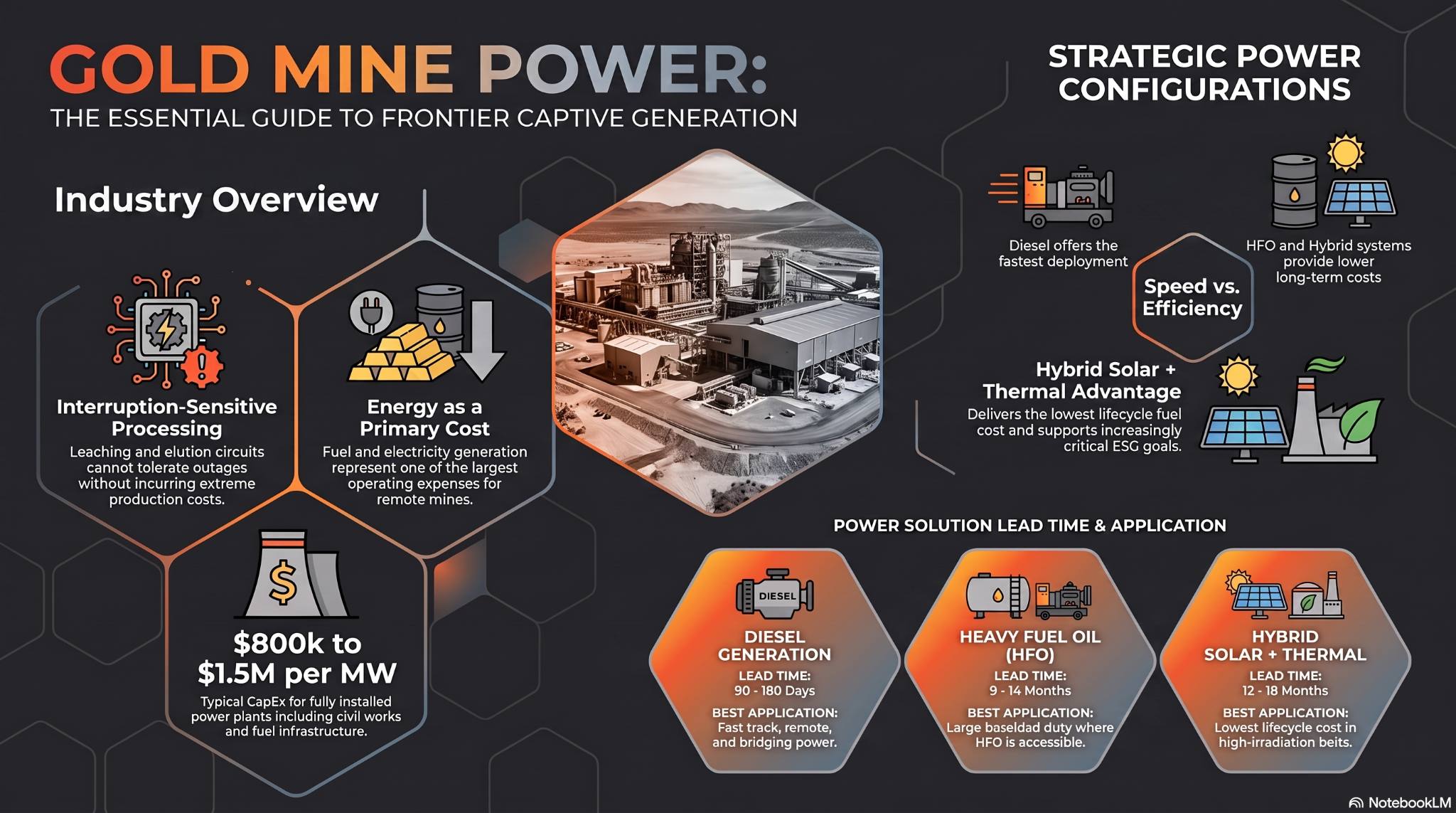
Engineering gold mine power begins with the fuel available at site and the processing load profile. Diesel generation offers the fastest route to power and suits remote sites and bridging needs while permanent capacity is built. Heavy fuel oil delivers the lowest thermal fuel cost for large baseload duty where it can be trucked or shipped in. Hybrid systems that pair solar generation and battery storage with thermal generation increasingly cut fuel burn substantially while protecting the continuous reliability that gold processing demands, which matters especially for the interruption sensitive leach circuits. USP&E’s gold mining work sits within its broader project experience.
Timelines vary by technology, and honesty protects the client. The table below sets realistic expectations.
| Solution Type | Realistic Time to Power | Notes |
| Containerized diesel (in inventory) | 90 to 180 days | Fastest deployable captive option |
| Hybrid solar and thermal | 12 to 18 months | Lowest lifecycle fuel cost |
| HFO reciprocating plant | 9 to 14 months | Never genuinely fast track |
| Gas generation (where gas exists) | 6 to 12 months | Rare at remote gold sites |
Operations and maintenance is decisive for gold mine power, because a gold operation runs continuously and an outage in the processing circuit is extremely costly. Spare parts must be pre positioned, resident teams must be on site, and availability must be guaranteed contractually. Fuel quality, dust, heat, security, and remote logistics all demand disciplined operation. A credible operations and maintenance model delivers availability guarantees backed by liquidated damages, resident crews, and spare parts strategy, sustaining the uptime a gold mine depends on.
On honest economics, fully installed gold mine power typically falls between 800,000 and 1,500,000 US dollars per megawatt once balance of plant, civil works, fuel infrastructure, and distribution are included, with remote Sahel and West African sites toward the upper end because of trucking, hardened civils, and security. Operating cost is dominated by fuel, which is why hybrid and HFO configurations attract gold operators chasing the lowest lifecycle cost. A strong EPC construction partner and hybrid power systems capability let the mine optimise reliability and cost together.
Fuel and Configuration Comparison for Gold Mine Power
| Fuel Type | CapEx | OpEx | Lead Time | Best Application |
| Diesel | Moderate | High fuel cost | 90 to 180 days | Fast track and bridging |
| Heavy fuel oil | Higher | Lowest thermal fuel cost | 9 to 14 months | Large baseload |
| Hybrid solar and thermal | Higher | Lowest lifecycle | 12 to 18 months | High irradiation gold belts |
| Owned plus operated | Higher upfront | O&M fee, guaranteed uptime | Per project | Long life gold mines |
Case Studies: Proven Gold Mine Power in West Africa and the Sahel
The most credible evidence is delivered performance powering real gold mines in demanding conditions. USP&E has powered gold operations across the most active gold belts on earth, for some of the largest producers in the sector.
In Mali, USP&E has operated captive power for major gold producers including Barrick and Resolute, sustaining availability above 97 percent across multiple years through political upheaval and pandemic disruption, with more than 120 engineers and technicians on the ground. For a Mali gold mine, USP&E delivered a 30 megawatt heavy fuel oil plant under full EPC and a multi year operations and maintenance contract, reaching commercial operation in 11 months and delivering substantial fuel savings against a diesel baseline while holding availability above the contractual requirement for years. Across the wider Sahel and West African gold belt, USP&E has deployed diesel, HFO, and hybrid solar solutions matched to each gold operation’s fuel and logistics reality, including dual fuel installations that switched fuel within minutes during a supply interruption to protect production.
These outcomes are documented in USP&E’s client references. The common thread is reliable gold mine power delivered where the grid does not reach and most contractors will not operate, sustaining the uptime that gold production depends on.
How to Select the Right Partner for Gold Mine Power: 10 Critical Criteria
Choosing a partner to power a gold mine is a risk management decision affecting production for the life of the operation. These criteria help a mine energy manager or owner evaluate candidates objectively.
- Gold mining track record. Look for documented power delivery to comparable gold operations, ideally with named, contactable references.
- Sahel and frontier capability. Confirm the partner can operate in remote, weak grid, and security complex gold regions.
- Fuel breadth. The partner must be credible across diesel, HFO, and hybrid, matching the solution to the site.
- Availability guarantees. Insist on contractual availability backed by liquidated damages, since processing downtime is extremely costly.
- Resident operations. Gold mines need on-site or rapidly deployable teams, not fly in fly out servicing.
- Spare parts pre positioning. Critical spares must be held near the site to avoid prolonged outages.
- Hybrid capability. Solar plus storage plus thermal cuts fuel cost and supports ESG goals at gold operations.
- Integrated EPC and O&M. A partner who builds and operates owns the production reliability outcome.
- Compliance posture. Confirm Foreign Corrupt Practices Act and Office of Foreign Assets Control compliance, which gold majors and lenders require.
- Verify ISO 9001 quality and ISO 45001 safety certification.
Evaluated against these criteria, the field of partners genuinely qualified for gold mine power narrows sharply.
Frequently Asked Questions: Gold Mine Power
What is gold mine power?
Gold mine power is the captive electricity generation that supplies a gold mining operation, which is usually remote and off grid. It powers the crushing, grinding, leaching, and processing circuits continuously using diesel, heavy fuel oil, or hybrid solar plus thermal systems, engineered and operated to keep the mine producing where the grid cannot reach.
How much does gold mine power cost?
Fully installed gold mine power typically ranges from 800,000 to 1,500,000 US dollars per megawatt once balance of plant, civil works, fuel infrastructure, and distribution are included, with remote Sahel and West African sites toward the upper end. Operating cost is dominated by fuel, which is why hybrid and HFO configurations are attractive. A firm number requires a signed agreement, the site location, the fuel specification, and proof of funding.
What is the best power solution for a remote gold mine?
It depends on the site. Diesel offers the fastest deployment for remote and bridging needs, heavy fuel oil delivers the lowest thermal fuel cost for large baseload, and hybrid solar with thermal delivers the lowest lifecycle fuel cost where the solar resource is strong, which is common across the African gold belts.
Why can gold processing not tolerate power interruptions?
Gold processing circuits, particularly carbon in leach and elution, run continuously and are sensitive to interruption, which can cause costly process upsets and lost production. This is why gold mine power must come with contractual availability guarantees, pre positioned spares, and resident operations teams rather than reactive servicing.
How fast can power be deployed to a gold mine?
Containerized diesel plants from existing inventory can be commissioned in roughly 90 to 180 days, which is why they are favoured for fast track and bridging needs at new gold operations. Heavy fuel oil plants realistically require 9 to 14 months and are never genuinely fast track, while hybrid systems typically take 12 to 18 months.
Can hybrid solar cut gold mine power costs?
Yes. Hybrid systems that pair solar generation and battery storage with thermal generation can cut fuel burn substantially while preserving the round the clock reliability gold processing requires, lowering both operating cost and carbon intensity. This is increasingly attractive for gold mines under ESG pressure in the high irradiation African gold belts.
Summary: Key Takeaways for Gold Mine Power Decision-Makers
- Gold mine power is the captive generation that keeps remote gold operations producing continuously where the grid does not reach.
- Strong gold economics, remote weak grid sites, fuel cost pressure, and ESG expectations are all raising the importance of the power decision.
- Diesel offers speed, HFO offers the lowest thermal fuel cost, and hybrid solar plus thermal offers the lowest lifecycle cost across the high irradiation gold belts.
- Honest timelines matter. Diesel can deliver in 90 to 180 days, while HFO realistically needs 9 to 14 months and is never genuinely fast track.
- Reliability is decisive because gold processing circuits are interruption sensitive, demanding availability guarantees, pre positioned spares, and resident operations.
- USP&E has powered gold mines across West Africa and the Sahel for major producers, bringing 150 plus projects and 350 plus engineers to gold mine power.
Ready to Power Your Project? Talk to USP&E’s Engineers Free.
USP&E Global offers a complimentary 4-hour engineering consultation for qualified power station, EPC, and O&M projects. Whether you are in early feasibility or ready to mobilize, our team of 350+ engineers across 35+ countries is ready to guide your project to success with speed and without excuses.
USP&E Global. Powering Possibility. Built for the Frontier.
ISO 9001:2015 | ISO 45001:2018 | 150+ Projects | 35+ Countries | Zero Lawsuits
Quick Links:
- Contact USP&E by clicking on this link.
- Request a fast equipment quote
Global Resources
- USP&E's Project Experience Portfolio
- USP&E Case Studies and Client Reference Letters
- USP&E Integrity and Compliance policy
- USP&E's ISO Certifications and Credentials